


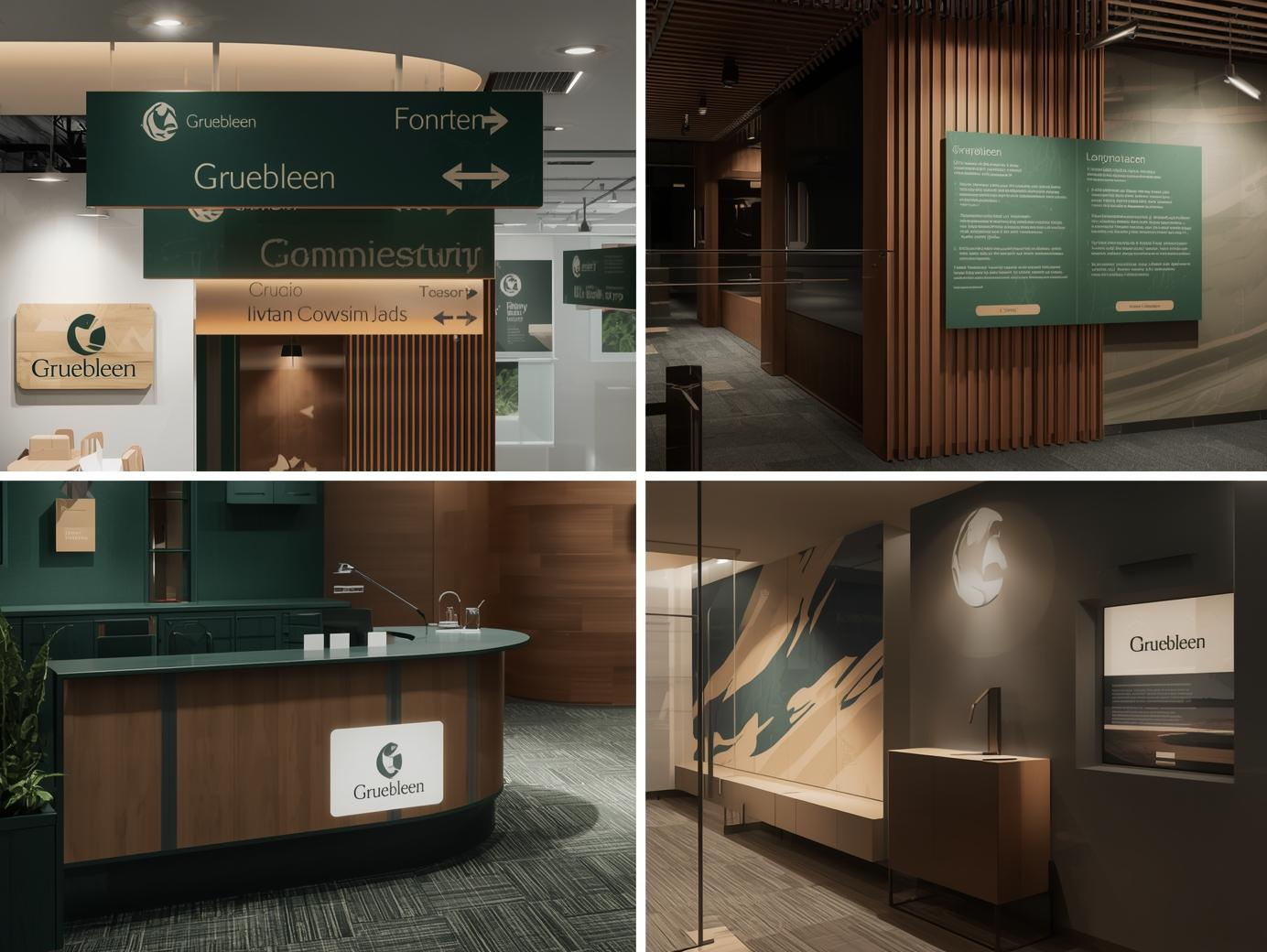
When any organization starts thinking about creating a complete brand that reflects its vision and strengthens its presence in the market, one of the most important elements of this brand is how the visual identity is applied in real physical spaces, whether inside the work environment or during events.
The success of preparing offices in Riyadh does not depend only on furniture or internal layout divisions. It also includes the design of internal and external signage that represents and expresses the personality of the brand.
In the same way, working with an exhibition preparation company in Riyadh requires a clear and deep understanding of how to transform the visual identity into clear visual elements in real life. This is especially important in signage design, because signage is considered the first point of contact between the brand and the audience.
Here appears the role of Gruebleen in providing complete professional solutions that ensure that signage becomes a true and accurate reflection of the visual identity in different environments.
What Is the Importance of Signage in Building the Mental Image?
A sign is not just a board that carries the company name. It is a strategic visual element that directly affects the first impression.
In many situations, the sign is the very first communication point between the brand and the customer.
When a client visits an office for the first time or enters an exhibition booth, what they see in front of them forms a quick judgment about the company’s level and quality.
1. It Introduces the Brand
The sign clearly shows:
- The company name
- The logo
- The official colors
- Sometimes the business field
This immediate introduction helps the client understand who you are and what you offer.
2. It Reflects Professional Level
A professionally designed sign means the company cares about details.
A random or poorly made sign may suggest lack of organization or weak identity.
Good design, suitable materials, and high execution quality reflect a strong and stable image.
3. It Builds Trust
The client feels comfortable when seeing a clear and consistent brand mark.
A well-organized and properly illuminated sign gives a feeling of stability and credibility.
Trust begins from small details, and signage is one of the most important of these details.
4. It Supports Visual Consistency
When the sign matches:
- The visual identity
- The approved colors
- The official fonts
- The general design style
It strengthens consistency between all brand elements.
If it is not consistent, it creates a gap between the expected image and reality, which weakens the overall impact.
A sign is not a secondary element. It is a basic tool in building the mental image.
It opens the door to the first impression and decides whether the client will see the brand as a professional institution that deserves trust or not.
Investing in a well-planned and consistent sign is investing in the long-term strength of the brand.
find a safety shower suppliers
The Relationship Between Visual Identity and Signage Design
Visual identity includes the logo, colors, fonts, and overall style.
Signage design must strictly follow these elements.
Any unplanned change in logo proportions or colors may weaken the overall effect.
For this reason, signage design always begins with understanding the brand identity guidelines.
Find a Book Store
Essential Elements in Professional Signage Design
- Clear logo visibility
- Choosing suitable size for visibility from different distances
- Using contrasting colors for clarity
- Selecting materials that match the usage environment
- Balanced distribution of elements
Every small detail affects the final result quality.
Types of Signage in Offices and Exhibitions
Signage types differ according to their location and function. However, both exhibition preparation companies in Riyadh and office preparation companies in Riyadh must focus on one main goal: strengthening brand presence and building a strong mental image in the client’s mind.
First: External Signage
External signs are the first face of the institution.
They are the first thing the client sees before entering, so they must be carefully designed.
They need:
- High clarity readable from suitable distance
- Resistance to weather conditions like sun, dust, and rain
- Suitable lighting especially at night
- Design that reflects brand identity accurately in colors, fonts, and logo
A strong external sign gives a direct impression of professionalism and stability.
find maltipoo price
Second: Internal Signage
Internal signs are used inside offices for multiple purposes such as:
- Guiding visitors
- Identifying departments
- Displaying values or messages
- Strengthening visual identity inside the space
They must be:
- Consistent with interior design
- Clear and easy to read
- Harmonized with colors and materials used in the space
Consistency between internal signage and general identity strengthens customer experience and makes the place look organized and professional.
Third: Exhibition Signage
In exhibitions and conferences, the Exhibition Booth Design Company as Gruebleen must be sure that the signage is a main attraction element.
In a crowded environment of booths, signage must stand out quickly.
It must:
- Be visible from far distance
- Carry short and clear message
- Reflect brand personality directly
Find out more about the marketing agency in Oman
Strategies for Attracting Attention in Exhibitions
Defining a Main Focus Point
Inside the exhibition booth, there must be a main visual focus point, usually the logo or a strong short message.
Smart Use of Contrast
Contrast between colors and backgrounds helps visibility from far distances.
Simplicity in Message
Visitors do not have time to read long texts. A short clear message is more effective.
In exhibition environments, decisions happen in seconds.
Every visual element, especially signage, plays a critical role in attracting visitors.
Whether external, internal, or exhibition signage, it is not decorative.
It is a strategic tool that reflects identity, supports mental image, and directly affects customer experience from the first moment.
Find glasses store online
Common Mistakes in Signage Design
Signage design requires balance and precision. Small mistakes can affect first impression.
1. Making the Logo Too Large Without Balance
The logo is important, but making it too big can:
- Remove design balance
- Make other elements look secondary
- Create visual crowding
Good design depends on visual balance, not only size.
2. Using Colors That Do Not Match Identity Guidelines
Using different colors from approved identity colors leads to:
- Weak consistency
- Brand confusion
- Reduced visual recognition
Following identity guidelines ensures mental image stability.
3. Using Unclear Fonts
Hard-to-read or overly decorative fonts can:
- Make the name difficult to read
- Weaken the message
- Reduce professionalism
Clarity is more important than decoration.
4. Ignoring Lighting
Lighting is essential especially in external signage.
Ignoring it may cause:
- Poor night visibility
- Loss of visual impact
- Reduced attractiveness
Well-planned lighting strengthens presence.
5. Using Low-Quality Materials
Poor materials may:
- Get damaged quickly
- Change color over time
- Give impression of carelessness
Execution quality reflects brand quality.
These mistakes may seem simple but negatively affect the institution’s image. Signage is not just a board. It reflects professionalism and stability. Good planning, identity commitment, and suitable materials ensure strong design.
Find best online printing services
How Does Signage Reflect Identity Correctly?
Commitment to Identity Guidelines
Identity guidelines define logo proportions, approved colors, and safe spacing.
Understanding the Environment
Office signage is different from exhibition signage.
The environment determines:
- Size
- Lighting type
- Suitable material
- Display style
Integrating Identity with Interior Design
In offices, signage must harmonize with décor so it does not look separate.
The Role of Planning in Design Success
Before executing any signage:
- Study the space
- Define viewing points
- Analyze natural and artificial lighting
- Choose proper materials
Careful planning prevents mistakes and saves cost later.
Find juice near me
Psychological Effect of Signage in Attracting Customers
Signage is a psychological message sent in the first moment.
When customers see consistent, clear, professional signage, they feel instant trust.
If signage is poorly executed or inconsistent, doubts appear.
The human brain reacts to visuals faster than text.
Power of First Impression
First impressions form in seconds and cannot easily change.
The external sign of the office or exhibition booth determines whether visitors feel interested or not.
Well-planned design ensures a positive first moment.
You can know more about the Best SEO Agency
Relationship Between Consistency and Trust
When signage matches other identity elements like print materials and website, customers feel organization and unity.
Visual consistency strengthens trust.
Integration of Signage with Other Identity Elements
Signage should not be designed separately. It is part of full visual system.
Business Cards
Business cards are direct extension of signage.
When colors, fonts, and logo style match, recognition becomes easier.
Printed Materials
Brochures and official papers must reflect same identity shown in signage.
Website
After seeing signage, when customer enters website, the same visual style must appear.
Matching colors and logo presentation strengthens consistency.
Social Media
Signage may be the first attraction, but social media continues the relationship.
Consistency strengthens brand presence.
Interior Design
Wall colors, internal boards, and lighting style must support the same visual system.
Find a seo service
Why Integration Is Important?
When all elements work together:
- The brand becomes more distinctive
- Easier to remember
- Trust increases
- The professional level appears high
If not consistent, customers may feel contradiction.
Measuring Signage Impact
- Observing the number of visitors who stop at the booth
- Asking new customers how they discovered the brand
- Analyzing first impression comments
Relationship Between Signage and Overall Customer Experience
Customer experience begins with seeing the sign.
A clear and consistent message creates a feeling of welcome and trust.
How to Ensure Long-Term Sustainability?
- Choose high-quality materials
- Follow identity guidelines
- Update the design when the identity develops
- Regular maintenance
Sustainability means maintaining the same quality over time.
Frequently Asked Questions
Can signage be designed without identity guidelines?
It is always better to follow identity guidelines for consistency.
What is the difference between office and exhibition signage?
The office focuses on stability and professionalism. The exhibition focuses on fast attraction.
Do materials affect brand image?
Yes, materials reflect quality level.
Why is lighting important?
Lighting ensures visibility and completes the design.
How long does design and execution take?
Depends on project size, but always begins with the analysis stage.
Signage design is not a secondary step in brand building. It is a strategic element that reflects identity strength in reality.
Whether in an office or an exhibition booth, signage is the first visual communication point. Its success depends on consistency, execution quality, and understanding the environment. Professional signage strengthens trust, supports mental image, and gives a strong presence in customers’ minds.
For this reason, Gruebleen, as a Signage Design Company, follows a full methodology that begins with identity analysis and ends with high-quality signage execution that reflects brand personality and supports marketing goals in different environments.
Find the Best Online Quran Academy