


How Does Professional Business Card Design Impact Your Company’s Image?
How Does Professional Business Card Design Impact Your Company’s Image?
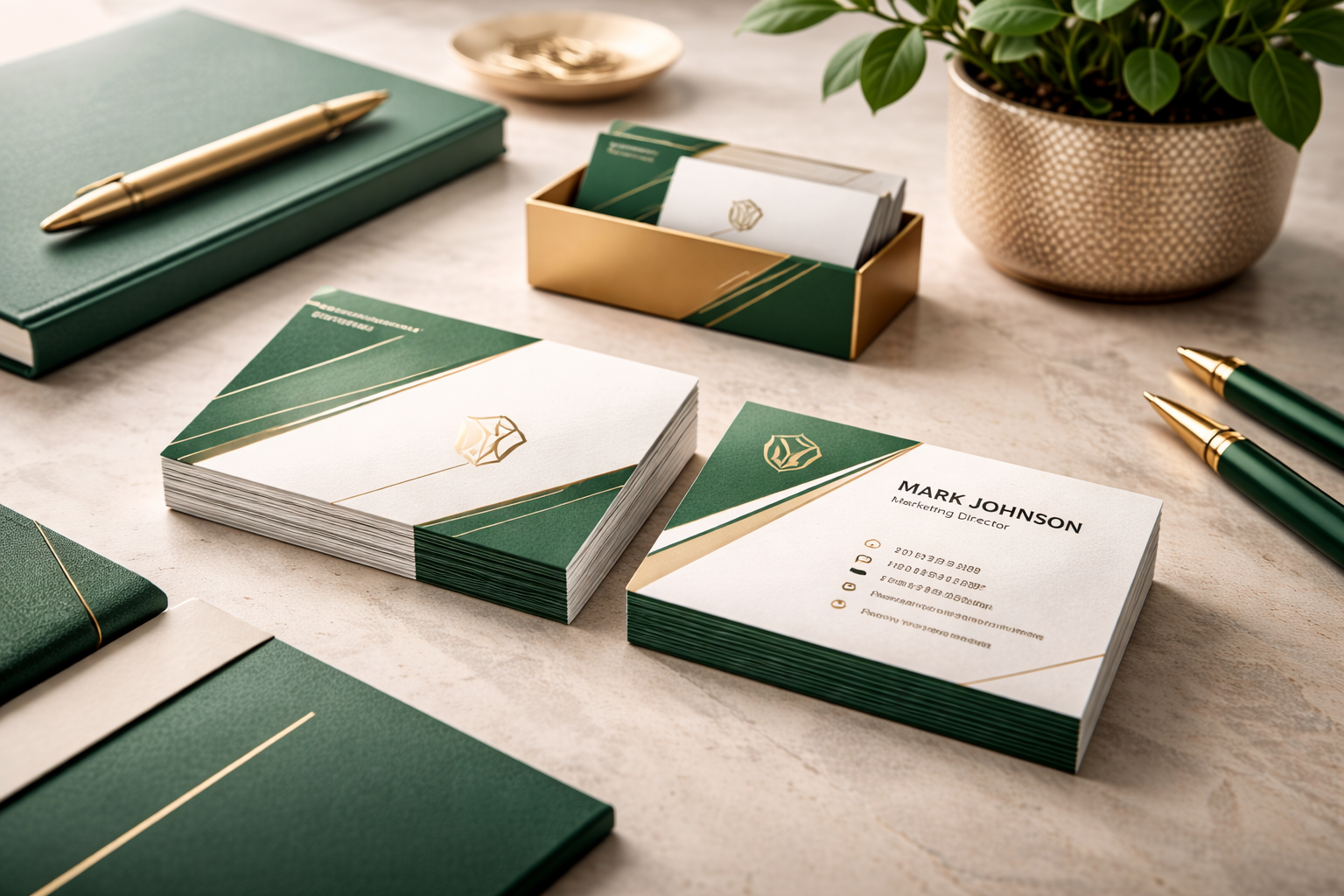
In today’s modern business world, professional communication no longer depends only on words or presentations. First impressions have become a decisive factor in building trust and opening doors for cooperation. One of the most important tools that reflect a company’s professionalism is the business card—especially when it is part of a complete corporate visual identity design, supported by corporate printing design services, and executed professionally within an integrated company printing design system that accurately reflects the nature and personality of the business.
From this perspective, Gruebleen offers integrated solutions for professional business card design, paying close attention to the smallest details that may seem simple but make a significant difference in the eyes of clients and potential partners.
A business card is not merely a way to display a name and phone number. It is a compact visual message that carries the company’s identity, reflects its level of professionalism, and leaves an immediate impression on the recipient. Treating business card design as a core element of the visual identity—rather than a separate item—is what distinguishes successful companies from others.
The Importance of Business Cards in Building a Professional Image
Despite digital transformation and modern communication tools, business cards remain essential in face-to-face meetings, conferences, exhibitions, and professional events. A well-designed business card creates an instant impression of how much a company values details and reflects its seriousness in dealing with clients and partners.
When designed carefully, a business card helps anchor the company’s name in memory and conveys trust and professionalism. In contrast, poorly designed or random cards may harm the company’s image instead of strengthening it.
Business Cards as Part of the Visual Identity, Not a Standalone Element
One common mistake is treating the business card as an isolated design unrelated to the brand’s other elements. In reality, the business card is one of the most important applications of visual identity and must reflect the same colors, typography, and style used across all marketing and printed materials.
Gruebleen provides you with best online printing services and designs business cards as a direct extension of the approved corporate visual identity, ensuring full visual consistency.
This consistency strengthens brand presence and reinforces professionalism in the audience’s perception.
Corporate Visual Identity Design and Its Impact on Business Cards
When discussing branding services in saudi arabia the business card is usually one of the first elements to be developed and implemented. Visual identity includes color selection, typography, icon style, layout rules, and visual hierarchy—all of which directly influence business card design.
A successful business card should:
- Reflect the company’s personality and business nature
- Align with all visual identity elements
- Be easy to read and clearly structured
- Deliver a professional impression without visual clutter
Through deep understanding of each business type, Gruebleen designs business cards that accurately express the company’s identity—whether it is formal, modern, creative, or corporate.
Color Selection and Psychological Impact in Business Card Design
Colors play a major role in delivering subconscious messages. Each color carries a psychological meaning that influences perception without conscious awareness. Choosing colors for business cards must be based on visual identity, not random preference.
- Soft colors reflect professionalism and trust
- Dark colors suggest strength and formality
- Light colors convey simplicity and clarity
Balanced color usage gives the business card visual appeal without exaggeration—an approach Gruebleen carefully applies in its designs.
Corporate Printing Design and Its Role in Unifying Brand Image
Business cards are part of a broader system that includes corporate printing design, such as letterheads, envelopes, brochures, folders, and company profiles. Visual consistency across these elements strengthens brand perception and presents the company as organized and professional.
When clients see a business card that aligns with other printed materials, they feel that the company operates with structure and attention to detail—key factors in building long-term trust.
Typography and Its Impact on Information Clarity
Typography selection is just as important as color choice. Fonts must be clear, readable, and aligned with the business nature. Overly decorative or unclear fonts can compromise the card’s primary function.
Gruebleen selects professional typography that ensures clarity of names, job titles, and contact details while maintaining visual elegance.
Professional Company Printing Design Starts with the Business Card
The business card is the starting point of a complete company printing design system. When designed professionally, it becomes easier to build all other printed materials using the same visual foundation.
A successful business card:
- Summarizes the company’s identity in a small space
- Presents essential information without clutter
- Reflects a professional level that builds trust
For this reason, Gruebleen treats business card design as a strategic element, not a simple task.
Paper Quality and Its Impact on First Impressions
The material used for printing business cards is just as important as the design itself. It is the first tactile interaction with the brand and often forms an immediate impression of quality and professionalism.
Low-quality paper can undermine even the best design, while premium materials enhance the experience. Paper choice depends on the business type and target audience. Some companies prefer thick matte paper for a formal feel, while others choose smooth finishes or special textures for a modern touch.
Gruebleen carefully studies these details to ensure harmony between material, visual identity, and marketing message.
Printing Techniques and Their Effect on Card Quality
Printing techniques significantly affect final quality. Poor printing may distort colors or blur text, negatively impacting the card’s appearance. Professional printing ensures color accuracy, sharp details, and long-lasting clarity.
Choosing the right technique—digital, offset, or specialty printing—depends on quantity, material, and design requirements. These decisions are made strategically to achieve optimal results.
Balancing Aesthetics and Clarity in Business Card Design
A common mistake is focusing too much on aesthetics at the expense of clarity—or vice versa. A successful business card balances both, remaining visually attractive while easy to read.
Overcrowding elements, using multiple fonts, or poor layout reduces effectiveness. Professional design relies on white space, visual hierarchy, and clear prioritization of information.
Business Card Size, Orientation, and Practical Use
While standard business card sizes are most common, some companies choose unique dimensions or orientations to stand out. However, this differentiation must be practical. Unusual sizes may not fit wallets or cardholders, reducing retention.
Orientation, corner cuts, and proportions may seem minor, but they significantly affect daily usability and perception.
Essential Information Every Business Card Should Include
A business card is not meant to display everything—only what is essential. Name, job title, company name, and key contact details are indispensable.
Adding unnecessary information can clutter the design and distract attention. Smart organization helps recipients absorb information quickly and effectively.
Common Business Card Design Mistakes
Frequent mistakes include lack of alignment with brand identity, poor color selection, unreadable fonts, low print quality, and inappropriate materials. These mistakes often occur when business cards are treated as secondary elements rather than core branding tools.
Avoiding these errors requires a holistic view of branding and communication.
Business Cards as a Long-Term Marketing Tool
Despite their simplicity, business cards are among the most durable marketing tools. A professionally designed card may be shared multiple times and act as indirect promotion for the company.
This longevity makes it essential for the card to carry a positive, professional brand message every time it is viewed.
Traditional vs. Creative Business Cards
Traditional cards focus on clarity and professionalism, while creative cards aim to stand out through unique ideas. The choice depends on business nature and target audience.
Creativity does not mean excess—it can be achieved through a smart detail or simple concept that distinguishes the card without compromising its function.
The Role of Business Cards in Building Professional Trust
Receiving a well-designed business card makes clients feel the company is organized and detail-oriented. This trust can be the first step toward future collaboration.
In business, small details often determine big decisions—and business cards are one of those influential details.
Ensuring Visual Consistency Across Marketing Tools
Visual consistency between business cards and other communication tools strengthens brand presence. This consistency requires deliberate planning and disciplined application of visual identity across all materials.
When everything aligns, the brand appears clearer and more reliable.
Business Cards and the First Customer Experience
Customer experience begins long before contracts or services—it starts with the first visual or physical interaction. Often, the business card is that first tangible touchpoint.
A carefully designed card sends a subtle message that the company values details and respects the client’s time, creating a lasting positive impression.
Small Details That Differentiate Your Brand
In competitive markets, small details make a real difference. Paper texture, edge cuts, color contrast, and layout all contribute to brand personality.
Attention to these aspects gives the business card a distinctive character and separates it from hundreds of others.
Simplicity as a Strength in Business Card Design
Simplicity does not mean emptiness—it means clarity and focus. Smart minimalism often has greater impact than crowded designs.
White space, thoughtful hierarchy, and one strong visual element can create a confident, memorable presence.
Aligning Business Card Design with Local Market Culture
Understanding local business culture is essential. A business card must reflect professional norms, expectations, and aesthetic preferences of the target market.
What works in one market may not work in another. Design must respect cultural context while preserving brand identity.
When to Choose Tradition vs. Bold Design
Not all businesses need bold designs. Some industries value stability and clarity, while others thrive on creativity.
Choosing the right direction requires deep understanding of the brand’s message and audience.
Business Cards at Exhibitions and Professional Events
At exhibitions, visitors receive many business cards in a short time. Cards that are remembered are those that stand out through design, material, or clarity.
In this environment, the business card becomes a competitive tool that reinforces brand recall after the event ends.
Flexibility and Updates in Business Card Design
Business cards can evolve as companies grow or update their visual identity. Smart design allows updates without losing brand recognition.
This flexibility reflects growth while maintaining continuity and trust.
Business Cards as a Daily Brand Extension
A business card may stay in a client’s wallet or on a desk for a long time, making it a constant brand presence.
This repeated exposure strengthens brand awareness with no additional effort, provided the design remains visually comfortable and durable.
Integrating Design and Printing for Optimal Results
Great design loses value without quality printing, and vice versa. Integration between both ensures the final product matches the original vision.
This requires expertise in translating digital design into a high-quality physical product.
Why Professional Companies Invest in Business Card Design
Professional companies understand that first impressions are irreplaceable. A business card is one of the fastest ways to shape that impression.
Investing in professional business card design is not a luxury—it is a strategic move reflecting seriousness and brand confidence.
Why Do Small Details Make a Big Difference in Business Card Design?
In business, small details are not decorative touches—they are decisive factors in first impressions. Professional business card design is a smart investment that reflects brand identity, communicates professionalism, and leaves a lasting impression.
A successful card is built on a complete vision that integrates visual identity, clarity of information, material quality, and printing precision. When treated as a core communication tool, the business card becomes a powerful marketing asset that builds trust and opens new opportunities.
This is why Gruebleen focuses on every detail in designing an printing services, no matter how small, knowing that these details create real differentiation in competitive markets.
Frequently Asked Questions About Professional Business Card Design
Why is business card design important for corporate visual identity?
Business cards are among the first applications of visual identity, reflecting brand colors, typography, and overall tone, helping reinforce brand recognition and professionalism.
Are business cards still relevant in the digital age?
Yes, business cards remain effective in face-to-face meetings, exhibitions, and professional events, offering a tangible impression that digital tools alone cannot replace.
What distinguishes a professional business card from a basic one?
Professional cards feature identity consistency, clear information, high-quality materials, precise printing, and attention to detail.
Should business cards be simple or creative?
This depends on business type and target audience. Some industries require simplicity and formality, while others benefit from controlled creativity.
What mistakes should be avoided in business card design?
Common mistakes include poor color choices, unreadable fonts, cluttered layouts, low print quality, and lack of alignment with brand identity.
How does a business card affect customer trust?
A professionally designed card signals organization, reliability, and attention to detail, increasing customer confidence.
Can business card designs be updated over time?
Yes, designs can be updated to reflect brand evolution while maintaining consistency and recognition.
This article highlights the importance of professional business card design as a core tool for professional communication and first impressions. A successful business card is the result of strategic planning that begins with corporate visual identity design, extends to corporate printing design, and reflects overall company printing design quality.
By focusing on details such as color, typography, materials, and printing techniques, companies can build trust, strengthen brand perception, and achieve a strong professional presence in the business market.
إذا كان لديكم مغامرة مشوِّقة لنا، فما رأيك أن تتواصل معنا؟
هاتف # 00966112637214
العنوان # ص.ب رقم: 12891 – الرياض 11391 – المملكة العربية السعودية
من الأحد إلى الخميس من الساعة 8 صباحاً حتى 4 مساءً