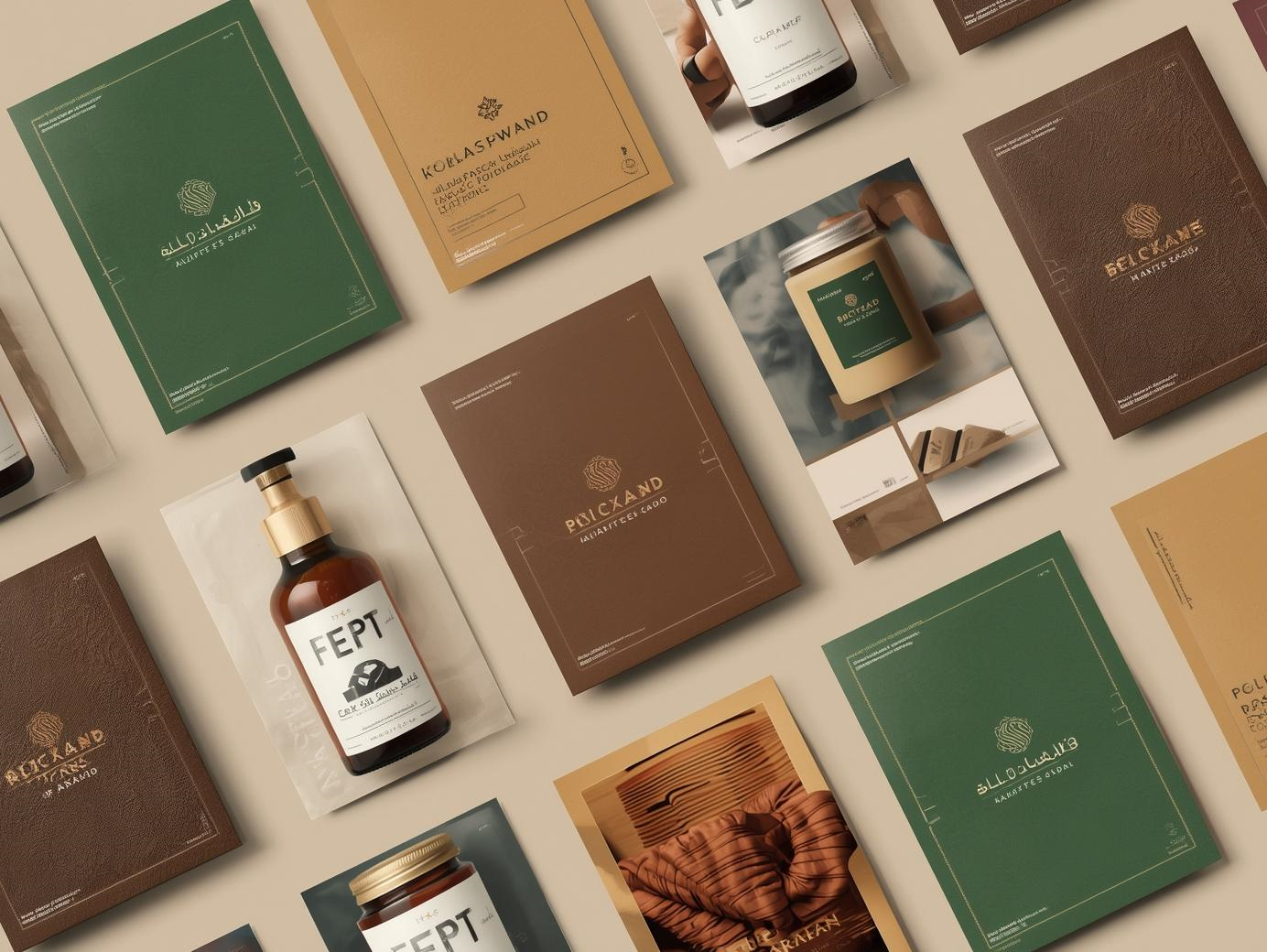
In today’s competitive business landscape, purchasing decisions are not always driven by price—or even by the actual functional quality of a product. More often, they are influenced by the mental image a brand builds through professional brand identity design that reflects its values, carefully crafted marketing materials—even in seemingly minor details such as brochure printing cost, which can impact the overall quality impression—and a clearly structured brand design strategy that builds trust and belonging.
Many customers are naturally drawn to premium-priced brands even when cheaper alternatives offer comparable quality. The reason lies not only in the product itself, but in the psychological and marketing strategy behind the brand.
This is where Gruebleen plays a vital role—helping businesses build strong brands capable of creating perceived value that makes price a secondary factor in the purchasing decision.
Why Customers Don’t Buy with Logic Alone
Emotion Comes Before Reason
Although purchasing decisions often appear rational on the surface, behavioral science consistently shows that emotion leads the decision-making process, while logic follows to justify it.
Customers rarely ask only:
“Is this product good?”
Instead, they subconsciously ask:
- What does this product represent about me?
- Does it reflect my status or lifestyle?
- Will it make me feel confident or distinguished?
- Does it align with my aspirations?
Emotion may stem from:
- A desire for security
- A sense of belonging
- Social recognition
- Personal ambition
- Self-expression
Once the emotional decision is made, logic searches for supporting reasons such as quality specifications, features, and pricing justification.
Premium brands understand this dynamic deeply. They do not compete only on technical attributes—they compete on emotional positioning.
Find an insulating mat
Perceived Value Is More Powerful Than Price
Price is a fixed number.
Perceived value is a psychological concept.
Perceived value represents the difference between what a customer pays and what they feel they receive in return. The stronger the perceived value, the less sensitive the customer becomes to price.
Premium brands succeed because they sell:
- An experience
- A lifestyle
- A sense of identity
- A symbol of status
They increase perceived value through:
- A cohesive and professional brand image
- Clear messaging that reinforces trust
- A seamless customer experience
- Strong and consistent visual presence
Purchasing is not a purely mathematical calculation. It is a combination of emotion, perception, and rational justification.
Brands that understand this balance build deeper, long-term relationships with customers.
The Role of Brand Identity Design in Elevating Brand Value
Brand identity design is far more than a logo and color palette. It is a comprehensive communication system that embodies the personality and positioning of the brand.
It is the silent language through which customers form impressions and develop trust.
Luxury-oriented brands understand that strength lies in attention to detail.
Identity Elements That Enhance the Sense of Premium Quality
Carefully Selected Colors
Color is not just aesthetic—it is psychological.
Balanced, deep, and refined color choices convey:
- Stability
- Authority
- Sophistication
- Confidence
Consistency in color usage strengthens recognition and reinforces brand positioning.
Professional Typography
Typography communicates personality as much as words do.
Structured, clean fonts imply:
- Seriousness
- Professionalism
- Stability
Poor font choices weaken perception—even if the content itself is strong.
High-Quality Visual Presentation
Professional photography, controlled lighting, refined composition, and attention to visual details elevate perceived product value.
Images do not merely display the product—they enhance its worth.
Visual Consistency Across All Platforms
Consistency transforms identity into a powerful system.
When customers encounter the same visual standards across:
- Website
- Printed materials
- Social media
- Advertisements
- Packaging
They develop a sense of stability and reliability.
This consistency reduces doubt and builds trust.
When a customer experiences a cohesive brand identity at every touchpoint, they feel they are dealing with a mature and stable organization—not a temporary project.
This sense of confidence reduces price sensitivity.
Does a Higher Price Always Mean Higher Quality?
Not necessarily. While higher prices can signal quality, the actual difference in product performance is often minimal. What truly distinguishes premium brands is how the product and the brand are presented, not just the number on the price tag.
Premium brands succeed because they focus on a holistic experience:
- Build a compelling brand story: Customers are drawn to narratives that give meaning to the product and reflect values they identify with.
- Reinforce exclusivity: Limited editions, selective distribution, and visual cues of luxury enhance perceived status.
- Create a memorable purchasing experience: From packaging to in-store or online interactions, every touchpoint is designed to leave a lasting impression.
- Invest in long-term brand positioning: Consistency in identity, messaging, and customer experience builds trust and loyalty over time.
In many cases, the price itself becomes part of the strategy. A higher price can reinforce exclusivity and signal distinction, making the brand desirable even when the tangible quality difference is subtle. The perception of value often matters as much—if not more—than the actual product performance.
The Impact of Packaging and Printed Materials on Purchase Decisions
Small Details Matter
In branding, the impact of small details is often underestimated. Elements like packaging design, brochure quality, or even the type of paper used play a critical role in shaping how customers perceive a brand.
If printing is low-quality, or materials feel cheap, the brand’s image immediately suffers, regardless of the product’s actual quality. Conversely, high-quality materials communicate much more than aesthetics—they convey a mindset:
- Attention to detail: Every choice, from texture to finish, signals that the brand cares about every aspect of its presentation.
- Investment in brand image: Premium materials show that the brand is willing to invest in its own identity, not just the product.
- Professional communication standards: Clean, consistent, and high-quality outputs reinforce credibility and reliability.
These details enhance the perceived value of the brand, helping customers feel that the premium price is justified. In essence, meticulous design and material choices turn ordinary products into experiences that resonate with quality-conscious consumers.
The Psychological Dimension Behind Choosing Expensive Brands
Social Status Influence
Some customers associate premium brands with success and social positioning.
Purchasing a higher-priced brand reinforces a sense of belonging to a desired social group.
Trust and Risk Reduction
Customers often pay more to reduce perceived risk.
A well-designed and established brand appears safer than an unknown cheaper alternative.
Premium branding reduces uncertainty.
How Proper Brand Design Strategy Makes the Real Difference
The difference between an ordinary brand and a strong brand lies in strategy.
A powerful brand strategy includes:
- Defining core values
- Precisely identifying the target audience
- Crafting a compelling narrative
- Aligning visual and verbal messaging
Premium brands invest heavily in these foundational steps, making them appear worthy of higher pricing.
Can Lower-Priced Brands Compete?
Yes—but only if they focus on:
- Professional identity building
- Improving customer experience
- Enhancing visual communication
- Investing in mental positioning
The issue is not low pricing.
The issue is weak perceived value.
The Deep Psychological Mechanisms Behind Premium Brand Preference
Perception Before Experience
Customers often form opinions before actual product use.
Visual identity, presentation style, and brand organization create expectations.
When a brand appears structured and strong, customers anticipate quality before trying it.
Expectation shapes evaluation.
The Scarcity Principle
Humans are drawn to rarity.
Limited editions, exclusive positioning, or restricted access enhance desirability.
Scarcity increases perceived value.
Social Proof
Seeing others use a premium brand reinforces desire.
Reviews, endorsements, and public perception influence purchasing behavior significantly.
How to Create a Premium Feel Even on a Limited Budget
Luxury does not always require a large budget—it requires consistency.
You can elevate brand perception by:
- Maintaining consistent colors and typography
- Using clean, elegant design
- Organizing content clearly
- Avoiding randomness
- Paying attention to details
Professional presentation does not require extravagance—only strategic coherence.
Mistakes That Prevent a Brand from Appearing Strong
- Inconsistent visual identity
- Constantly changing design styles
- Underinvesting in presentation
- Competing solely on low price
Strong brands rely on consistency, professionalism, and perceived value—not discount positioning.
The Relationship Between Price and Perceived Value
Price communicates a message.
A higher price can imply exclusivity—but only when supported by strong branding and professional presentation.
If image does not align with pricing, trust collapses.
How to Turn Price into a Strength
Strengthen the Brand Story
Story adds depth.
When customers understand brand values and mission, price becomes part of the experience.
Improve Customer Experience
Positive experiences create loyalty—even at higher price points.
Invest in Professional Communication
Clear, strategic communication shifts focus away from price toward value.
The Role of Gruebleen in Building Strong Perceived Value
Gruebleen is a Digital Branding Agency and Signage Design Company it helps companies develop comprehensive branding strategies in Saudi market focused on increasing perceived value—not merely enhancing product aesthetics.
Through professional identity design, cohesive marketing materials, and strategic messaging, brands become positioned as worthy of their pricing.
The goal is not just to make a brand look attractive—but to make it appear deserving.
Is Quality Alone Enough?
Quality is essential—but insufficient.
Without professional presentation and clear identity, quality may remain invisible.
Premium brands succeed not only because of what they sell—but because of how they present it.
And you will also need a high quality digital printing services
How a Brand Transforms from Ordinary Product to Strong Brand
Transformation Occurs Through Strategic Branding
Building a strong, recognizable brand isn’t accidental—it results from deliberate, coordinated efforts across multiple dimensions. Key elements include:
- Clear positioning: Defining exactly what the brand stands for and how it differs from competitors ensures that every interaction reinforces its identity.
- Consistent messaging: Uniform tone, language, and key messages across all channels prevent confusion and strengthen recall.
- Defined audience targeting: Understanding who the brand speaks to allows for tailored experiences that resonate emotionally and functionally.
- Visual and verbal alignment: Logos, colors, typography, imagery, and copywriting must all reflect the same personality and values.
When these signals are repeated consistently, they build stable mental images in the customer’s mind. Over time, this repetition creates a perception of reliability, professionalism, and value.
As a result, strong brands appear more valuable even when the actual quality differences between products are minimal—because perception, reinforced through strategy, often drives preference as much as, or more than, the product itself.
Frequently Asked Questions (FAQ)
Why are customers attracted to expensive brands despite cheaper alternatives?
Because they are purchasing perceived value, trust, and status—not just the product itself.
Does higher price always indicate higher quality?
Not necessarily—but it often reflects stronger brand positioning and presentation investment.
Can smaller brands compete?
Yes, by focusing on identity, clarity, professionalism, and customer experience rather than price alone.
What role does visual identity play in increasing brand value?
Consistent visual identity builds trust, recognition, and long-term positioning—reducing price sensitivity.
Can perceived value increase without raising prices?
Yes, through improved presentation, communication, and brand consistency.
The Real Secret Is Not the Price—It’s Perception
The true reason customers gravitate toward premium brands is not the price itself—but the carefully built mental image behind it.
When identity is clear, experience is consistent, and communication is professional, customers perceive the brand as worthy.
Premium brands make price secondary—because value feels greater than cost.
Building that perception requires a comprehensive strategy integrating identity, design, communication, and experience—exactly the approach Gruebleen delivers to transform businesses from simple products into powerful brands capable of competing with confidence in today’s market.